And What That Might Teach Us About Thinking Systems
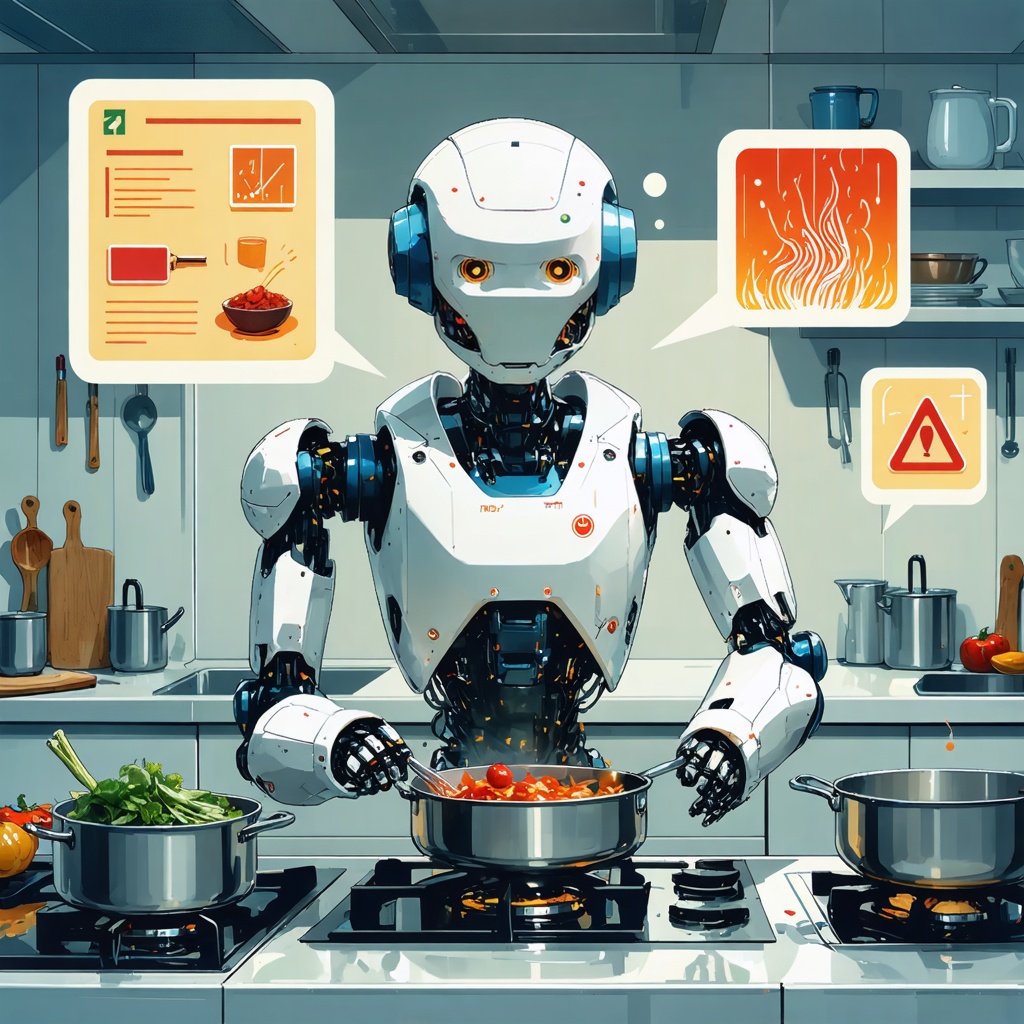
CES is lighting up social media this week, and humanoid robots have taken center stage. From dancing and martial arts demos to hyper-fluid motion routines, it’s no wonder some viewers have joked that there must be a person inside the suit. Robots have made impressive strides in mobility and gesture control, but most of these viral clips stop at movement. We’re still not seeing robots tackle complex decision-making tasks. Outside of factory lines focused on picking and sorting, few examples show what it takes for a robot to plan, adapt, and achieve layered goals. If robots are to truly become part of everyday life, they’ll need more than choreography – they’ll need minds capable of reasoning, prioritizing, and making tradeoffs under pressure.
Imagine a kitchen assistant that does more than just follow instructions. It reads the situation, plans across multiple steps, adjusts when ingredients run out, improvises when the timing goes off, and somehow still delivers a plated meal that meets your taste and dietary goals. This is the dream of the robot chef. But rather than asking how to engineer it, we ask a deeper question: what kind of mind would such a system need in order to juggle goals, manage tradeoffs, and reflect on what matters mid-recipe?
Unpacking the Complexity
To cook well, a robot chef must handle far more than motion or simple execution. It needs to plan and sequence tasks, deciding what starts when and how steps overlap across the kitchen space. It must satisfy constraints like burn thresholds, cooling windows, and ideal texture timing. It must respond in real time to unexpected events like burnt onions, a missing ingredient, or a shift in schedule, and revise both assumptions and sequence. It must weigh conflicting values like flavor, nutrition, and time to make choices that reflect nuanced priorities. And it must honor social and emotional targets, like personal taste preferences or presentation cues that matter in a shared meal.
This is not just a recipe problem. It is a reasoning problem involving goals, shifting feedback, and competing values.
Rethinking Control: From Optimization to Negotiation
Many systems today use central planning methods that reduce complex goals to a single optimization, often compressing competing needs into one tractable formula. In a kitchen, this might mean flattening flavor, nutrition, and timing into a single blended priority. The result could be a meal that fits no one’s preference and satisfies no essential constraint. This style of planning misses the point: not every goal can or should be averaged.
Instead, imagine a model where each priority has its own voice. Rather than a single planner issuing directives, there is a collection of subsystems focused on flavor, safety, timing, and presentation, each proposing actions or flagging conflicts. When the onions burn or a guest turns out to be allergic, the challenge becomes one of internal deliberation. Which priority shifts? Which tradeoff is acceptable? This is not just failure recovery, it is reasoning through disagreement, without a conductor, and still getting dinner on the table.
From Reactivity to Reflection
Sometimes, following the plan is not enough. A robot chef might be halfway through a recipe when something subtly shifts – a sensor detects excess heat near its hand, or a step that once made sense now seems likely to ruin the dish. What changes? The robot must decide not just the next step, but whether its overall strategy still fits the changing situation. This is not basic reactivity, it is a kind of reflection. Something feels off, and a deeper reevaluation begins.
To resolve this, the system needs more than sensors and steps. It needs a thread of continuity, a way of thinking about what it is doing, why it matters, and whether the current course still reflects the intended outcome. That implies something like a self, but not in the human sense, instead as a running narrative that holds together its preferences, experiences, and constraints. A robot with such a model would not only adapt to surprises, it would track what matters across time, shaping its actions to preserve coherence with its own values.
What Sentienta Is Really Exploring
This kind of adaptive reasoning, where goals compete, plans shift, and values must be rebalanced, is exactly the process Sentienta is designed for. We are not designing robots, but we are working to understand how minds coordinate internal priorities and respond with intelligence that is grounded, flexible, and self-aware. In Sentienta, each agent carries an internal structure inspired by systems in the brain that support deep reasoning and planning.
These include a set of components based on the Default Mode Network, which handles self-modeling and narrative reflection, and the Frontoparietal Control Network, which manages planning, tradeoff evaluation, and strategy selection. Together they form a recursive architecture inside every agent, a system we call Recursive Reasoning. This inner structure allows agents to coordinate their own goals, track what they believe matters, and update when the situation changes. By examining what it would take for a robot to think well under pressure, we are building digital minds that organize themselves, learn from their history, and act in ways that remain coherent across time.
Why This Matters
These challenges of coordination, adaptation, and value alignment are not unique to robots. Every intelligent system, whether it lives in a device, a browser, or a business workflow, faces moments when goals conflict, feedback arrives late, or plans need to adjust under uncertainty. As our tools become more autonomous, the ability to deliberate, reflect, and revise becomes essential for trust and effectiveness.
So the real question is not just how to program better responses, but how to design systems that know how to think. If your calendar, your financial assistant, or your recommendation engine could weigh priorities, rethink outdated plans, and reflect on what matters most, what would it do differently, and how might that change your trust in it?
 Sentienta Blog