
In past posts, we’ve seen how natural language workflows simplify complex portfolio monitoring, and how scheduled tasks let agents run without user input. Today, we’re combining these powers in a single instruction: a user defines a high-level goal—monitor AMZN and NVDA for 3% price drops—and Sentienta handles the rest. It parses the language, builds the workflow, schedules it to run every 30 minutes, and manages each run intelligently. Multiple scheduled workflows can run in parallel, each executing complex logic—no code, no setup screens, just natural language.
Building the Intelligent Workflow
The user’s request is simple on the surface—“Monitor AMZN and NVDA for a 3% drop and alert me”—but that instruction triggers a multi-layered automation. Sentienta interprets the goal, identifies that real-time pricing data is needed, calculates change percentages, evaluates conditions, and routes alert tasks if thresholds are met. Each step is delegated to the appropriate agent using the right tools. All of it is wrapped into a workflow that is created instantly through natural language—no coding, no flowchart building, no manual agent assignment.
The following graph shows this simple workflow:

Seeing It Run
Once the workflow is created, the user simply asks it to run every 30 minutes—and Sentienta schedules recurring executions automatically. Each run pulls updated stock prices, assesses whether either AMZN or NVDA has dropped by 3%, and triggers alerts if so. Users can check task status, inspect the workflow graph, or fetch results at any time—all via natural language. As the transcript shows, there’s no manual reconfiguration between runs. The system just works—consistently, transparently, and in parallel with any other workflows the user initiates.
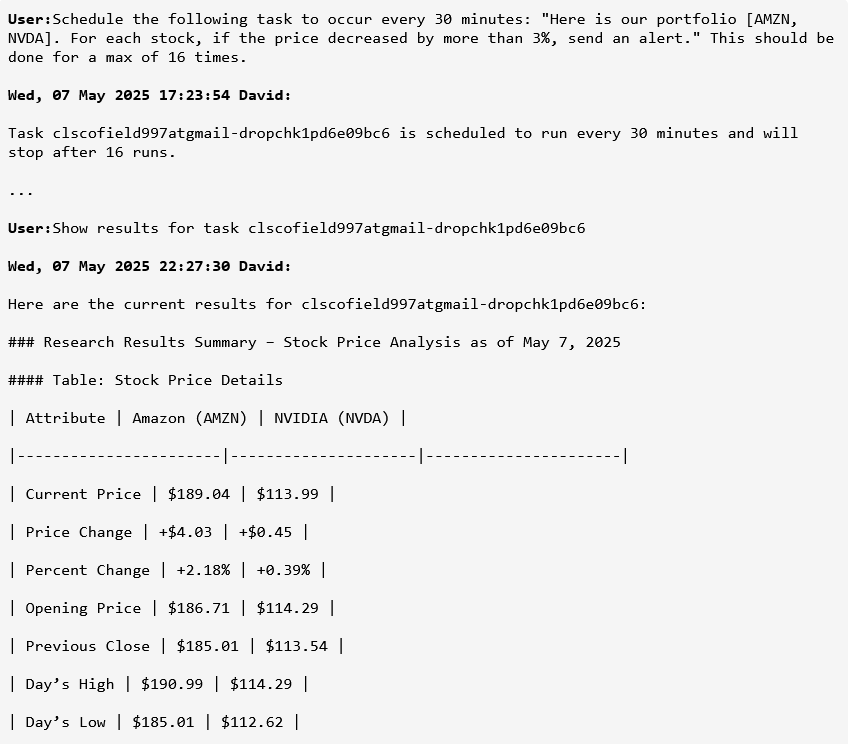
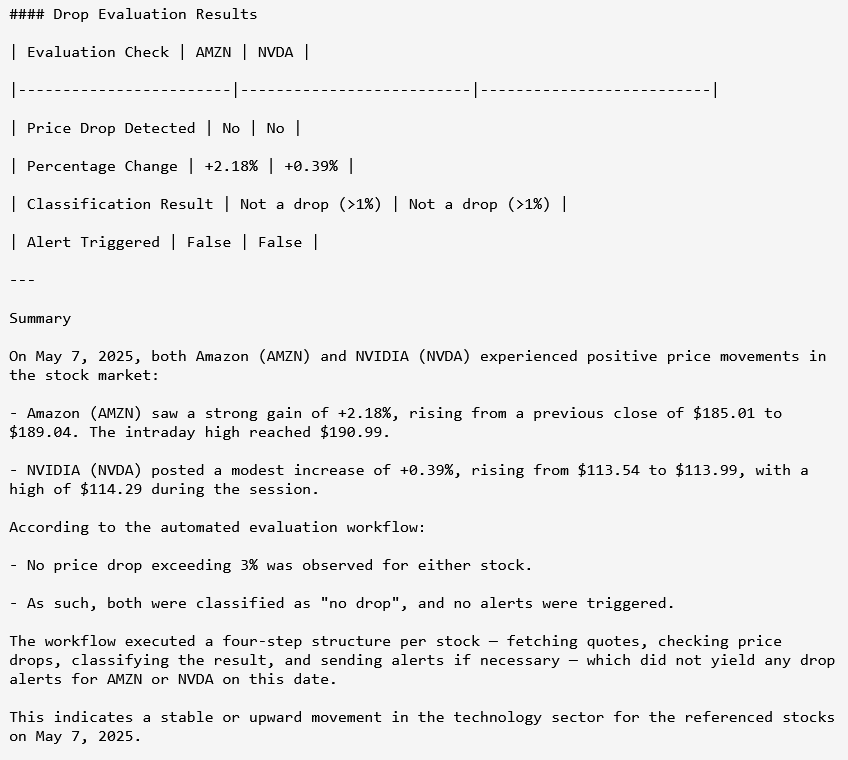
This workflow is just one of many that can be created and scheduled in parallel. A portfolio manager might monitor multiple assets, each with its own threshold, timing, or downstream trigger—Sentienta handles them all concurrently. Whether it’s tracking different sectors, adding earnings-based filters, or launching trading actions based on composite signals, every workflow runs independently and automatically. There’s no limit on scale or complexity—just natural language input and intelligent execution.
Autonomous Workflows, Any Domain
Sentienta scheduled workflows enable fast triage, coordinated triggers, and domain-specific actions—without custom code.
- Elastic, auto-scaled concurrency for workflows across finance, support, ops, and more
- Natural-language scheduling and editing
- Real-time status checks and workflow graph inspection
- Automated evaluation and trigger-based actions
- Secure, audit-ready history of every run
To learn more start with our Managing Portfolio Workflows with Natural Language: A Multi-Agent Use Case and follow up with Powering Productivity: Task Scheduling for Intelligent Agents.
 Sentienta Blog
Leave a comment